

Struggling to focus on that tricky algebra problem or remember key history dates? You’re not alone. Learning can feel tough, but it doesn’t have to be. Your brain is like a muscle; train it right, and it performs better. These 7 science-backed brain-boosting habits will help students (and the educators guiding them) study smarter, retain more information, and enjoy the process.
1. Prioritise Quality Sleep for a Sharper Mind

Sleep isn’t just rest; it’s when your brain consolidates memories, moving information from short-term to long-term storage. Studies show 7–9 hours of sleep improves recall by 40% compared to sleep-deprived brains.
How to Apply:
- Aim for 7–9 hours nightly, even on weekends.
- Avoid screens 30 minutes before bed to reduce blue light interference.
- Review key concepts before sleep. Your brain processes them overnight.
- Establish a calming bedtime routine (e.g., reading, rather than scrolling).
2. Move Your Body to Boost Your Brain
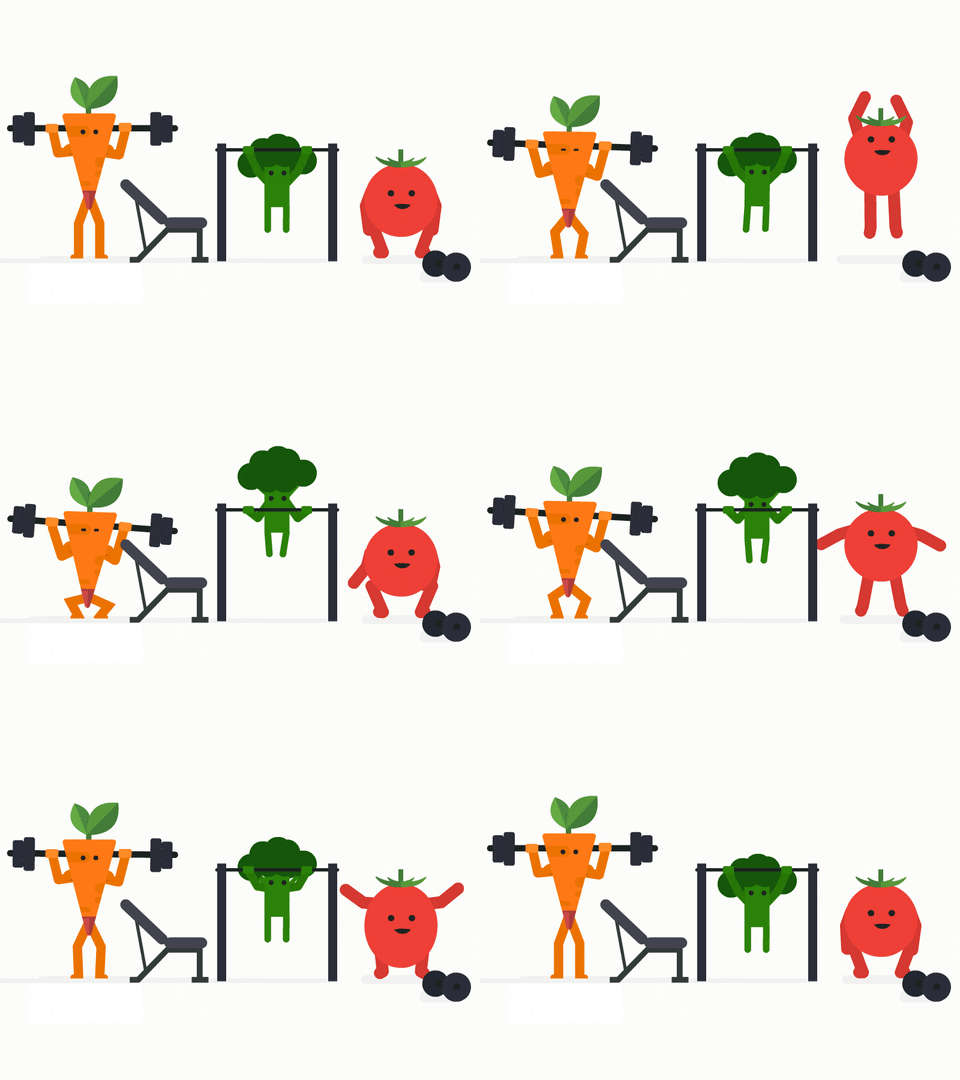
Exercise increases blood flow and releases Brain-Derived Neurotrophic Factor (BDNF), promoting new brain cell growth. A 20-minute walk can enhance focus for up to 2 hours.
How to Apply:
- Add 15–30 minutes of activity daily (walk, dance, or do jumping jacks).
- Take movement breaks every 45 minutes during study sessions.
- Try “active learning” (e.g., recite notes while pacing).
3. Teach What You Learn to Master It

Explaining concepts in your own words (the Feynman Technique) organises knowledge and reveals gaps, boosting retention by up to 30%. Teaching others reinforces neural pathways.
How to Apply:
- Pretend to teach a topic to a friend or sibling.
- Record short “lesson videos” on your phone.
- Join study groups to share explanations.
- Summarise notes aloud as if teaching a class.
4. Fuel Your Brain with Healthy Nutrition

Your brain uses 20% of your body’s energy. Nutrient-rich foods like omega-3s and folate enhance memory and focus, while junk food causes energy crashes.
How to Apply:
- Eat brain-friendly meals.
- Stay hydrated. Dehydration cuts cognitive performance by 10%.
- Swap sugary snacks for bananas or yoghurt.
- Start your day with a protein-rich breakfast.
5. Use Spaced Repetition for Long-Term Recall

Reviewing information at increasing intervals (the spacing effect) strengthens memory, reducing forgetting by up to 50% compared to cramming. It’s how your brain builds lasting knowledge.
How to Apply:
- Review notes 1 day, 3 days, 1 week, and 2 weeks after learning.
- Use flashcards or apps like Anki or Quizlet.
- Study in short, daily sessions (30 minutes > 5 hours at once).
- Create a review calendar for each subject.
6. Focus Deeply with the Pomodoro Technique

Multitasking reduces efficiency by 25%. The Pomodoro Technique (25-minute focus, 5-minute break) combats distractions and boosts productivity by training attention.
How to Apply:
- Pick a task (e.g., solve 10 equations).
- Set a 25-minute timer.
- Work without distractions (phone on silent).
- Take a 5-minute break (stretch, hydrate).
- After 4 Pomodoros, rest 15–20 minutes.
7. Process Interactively for Deeper Understanding

Deep processing creates stronger memories than rote memorisation. Active recall (quizzing yourself) boosts retention by 20%.
Why it Matters:
- Ask “Why?” and “How does this relate?” (e.g., link physics to local bridges).
- Create mind maps to connect ideas (e.g., historical events).
- Quiz yourself without notes after each topic.
- Relate lessons to real life (e.g., use percentages for market discounts).
These brain-boosting habits work for students, teachers, and parents, guiding learners. They’re especially powerful in Africa, where resourcefulness and community shine, perfect for mastering skills in large classrooms or busy homes.
How These Brain-Boosting Habits Can Be Made Easier
At Lumilearn, we’re not just about teaching; we’re about learning smarter. Our platform offers:
- Expert-led lessons to fit your schedule.
- Interactive quizzes for active recall and deep processing.
- Tutoring marketplace to teach or learn, boosting retention and income.
Get started today at www.lumilearn.io
Which brain-boosting habits will you try first? Drop your thoughts below!